Guar Gum – Technical Specifications
| Parameter | Specification | Corresponding Original Parameter |
|---|
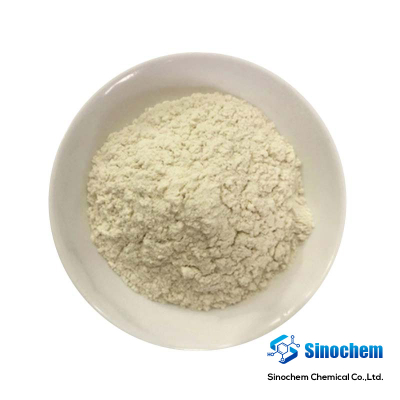
| Form | Free Flowing Powder | Free Flowing Powder |
| Color | Yellow-white | Yellow-white |
| Odor | Odorless | Odorless |
| pH (25°C, 1% in water) | 5.0–7.0 | PH 5.0–7.0 (25°C 1% in water) |
| Melting Point | >220°C (dec.) | Melting point >220°C (dec.) |
| Specific Rotation | D25 +53° (1N NaOH) | alpha D25 +53° (1N NaOH) |
| Density | 0.8–1.0 g/cm³ | density 0.8–1.0 g/cm³ |
| Refractive Index | 1.34 | refractive index 1.34 |
| Solubility | Yields a mucilage of variable viscosity when dissolved in water; practically insoluble in ethanol (96%) | solubility: It yields a mucilage of variable viscosity when dissolved in water, practically insoluble in ethanol (96 per cent) |
| FEMA Number | 2537 | FEMA 2537 |
| Storage Condition | Hygroscopic; store in -20°C Freezer, under inert atmosphere | storage temp.: Hygroscopic, -20°C Freezer, Under inert atmosphere |
| Stability | Stable, but combustible. Mixture of air and finely-divided powder is potentially explosive. Incompatible with strong oxidizing agents. | Stability: Stable. Combustible. A mixture of air and finely-divided powder is potentially explosive. Incompatible with strong oxidizing agents. |
| Merck Index | 13,4588 / 13,4587 | Merck 13,4588 / 13,4587 |
| EPA Substance Registry | Guar gum (9000-30-0) | EPA Substance Registry System: Guar gum (9000-30-0) |
Notes: Regarding solubility, guar gum disperses in both cold and hot water to form a viscous mucilage, but is practically insoluble in ethanol (96%). For storage, due to its hygroscopic nature, it is recommended to keep the product sealed under an inert atmosphere in a -20°C freezer to prevent moisture absorption. The specific rotation D25 +53° is determined in 1N NaOH solution.
Guar Gum – Safety Information
| Safety Parameter | Specification / Description |
|---|
| WGK (Germany) | 1 (low hazard to water) |
| RTECS Number | MG0185000 |
| HS Code | 1302.39.0090 |
| Hazardous Substances Data | 9000-30-0 (Hazardous Substances Data) |
| Acute Toxicity (oral) | LD₅₀ male rats: 7.35 g/kg; female rats: 6.77 g/kg (Graham) |
| Hazard Classification | Non-hazardous, but airborne powder may form a potentially explosive dust mixture |
| Storage & Handling | Keep container tightly closed, away from strong oxidizing agents; store in a cool, dry, well-ventilated area due to hygroscopicity |
| Personal Protection | Avoid dust inhalation; dust mask and safety goggles recommended during handling |
Toxicity Interpretation: Rat oral LD₅₀ values of 6.77–7.35 g/kg indicate very low toxicity, significantly higher (i.e., less toxic) than common table salt (LD₅₀ ~3 g/kg). This data aligns with the FDA GRAS (Generally Recognized as Safe) designation for guar gum.

Guar Gum – Applications Summary
Food & Beverages:
Guar gum is extensively used in the food industry as a thickener, emulsion stabilizer, and water-binding agent. In ice cream, addition at 0.15%–0.25% controls ice crystal growth and prevents gritty texture during freezing. In flour-based products, addition at 0.2%–0.6% improves dough elasticity and reduces drying time; typical dosage in fried noodle products is 0.3%–0.5%. In beverages, it serves as a suspending agent to prevent sedimentation and improve mouthfeel. In dairy products (yogurt, cheese), it prevents syneresis and enhances texture and uniformity. In sauces & condiments (salad dressings, ketchup, pickles), it provides acid resistance and emulsion stabilization, reducing oil-water separation. Under GB 2760-2024, guar gum may be used as needed in most food categories, with a maximum level of 1.0 g/kg in cream and 1.0 g/L in older infant and young child formula (as consumed). Typical usage is 0.2%–1% of total mass; overdosing may result in an excessively thick, pasty texture.
Oral Care & Personal Care:
In toothpaste, guar gum imparts slip for smooth extrusion from tubes and stabilizes paste structure. In skincare (lotions, creams, facial masks, sunscreens), it acts as a thickener, stabilizer, and film-former, forming fine gel-like structures to improve product texture and spreadability, while also enhancing freeze-thaw stability and preventing phase separation. In hair care (shampoos, conditioners), it provides conditioning and moisturizing effects, increases hair gloss, and helps mitigate the harsh after-feel of surfactant systems.
Pharmaceuticals & Health:
In the pharmaceutical industry, guar gum is primarily used as a binder and disintegrant in tablet formulations, enhancing drug delivery and bioavailability. It also serves as a hydrophilic matrix material for sustained/controlled-release dosage forms. As a soluble dietary fiber, guar gum is used in bulk laxatives to promote intestinal motility, and has been studied for dietary management in diabetic patients to help slow glucose absorption.
Oil & Gas:
Guar gum is a key viscosifier for oilfield fracturing fluids and drilling muds, with approximately 70% of global guar gum demand originating from the oil and gas sector. In hydraulic fracturing, guar gum solutions carry proppant deep into formation fractures, enhancing hydrocarbon recovery; in drilling fluids, it provides thickening, fluid-loss control, friction reduction, and bit lubrication/cooling. Modified guar gums (e.g., hydroxypropyl guar) offer improved thermal stability for high-temperature deep wells while reducing formation damage.
Industrial Applications (Textile, Paper & Others):
In textiles, guar gum is used as a warp sizing agent to strengthen yarns and reduce breakage during weaving, and as a thickener and dye dispersant in textile printing pastes to ensure uniform color adhesion. In papermaking, it improves folding endurance and tensile strength while reducing porosity and enhancing surface finish, serving as a wet-end additive and surface sizing agent. Additionally, guar gum finds use in construction coatings, printing & dyeing, mineral processing as a flotation and flocculating agent, and minor applications in battery electrolytes, printing inks, and adhesive formulations. Its excellent biodegradability and low toxicity make it an ideal choice for environmentally friendly industrial auxiliaries.